Editorial comparison
Best ADHD Books for Late Diagnosis
A tighter shortlist for adults who are not just looking for ADHD advice, but for a better way to understand years of hidden effort, burnout, and self-blame.
Late diagnosis changes the question. You are not just looking for an ADHD book. You are trying to understand years of hidden effort, uneven performance, shame, burnout, and the weird grief of realizing that the pattern was there the whole time.
That is why the best late-diagnosis books are different from the best general adult ADHD books. They need to help with self-understanding without drowning you, masking and overcompensation, practical next steps after insight, and a less self-blaming way to read your past.
If diagnosis is still new, start with the book that gives you language and a stable first-month reset.
Quick picks
Use this shortlist if you want the fastest way to match a book to the failure point that is costing you the most.
| Best for | Book | Why it stands out |
|---|---|---|
| Best overall for late diagnosis | Unmasking Adult ADHD John Lindberg | Strongest fit if the private cost, masking, and late recognition are the real issue. |
| Best compassionate reframe | Your Brain's Not Broken Tamara Rosier | Strong if shame, emotional overload, and self-criticism are central. |
| Best readable first book | How to ADHD Jessica McCabe | Accessible and easy to enter if heavy books make you freeze. |
| Best women-specific late-recognition book | A Radical Guide for Women with ADHD Sari Solden and Michelle Frank | Best if missed diagnosis is tangled with gendered expectations and self-silencing. |
| Best broad clinical guide after the initial shock | Taking Charge of Adult ADHD Russell A. Barkley | Best once you want a grounded manual after the emotional dust settles. |
| Best second step if time and planning are next | The Practical ADHD Time Management Toolkit John Lindberg | Best when diagnosis is clear but daily execution is still collapsing. |
How I chose these books
These pages are trying to be useful, not perform fake objectivity or catalog hype.
- The book had to help with late recognition, not just generic adult ADHD.
- It had to reduce shame rather than intensify it.
- It had to support practical next steps after insight, not just identity-level understanding.
- It had to be readable enough for adults who are already overloaded.
1. Unmasking Adult ADHD
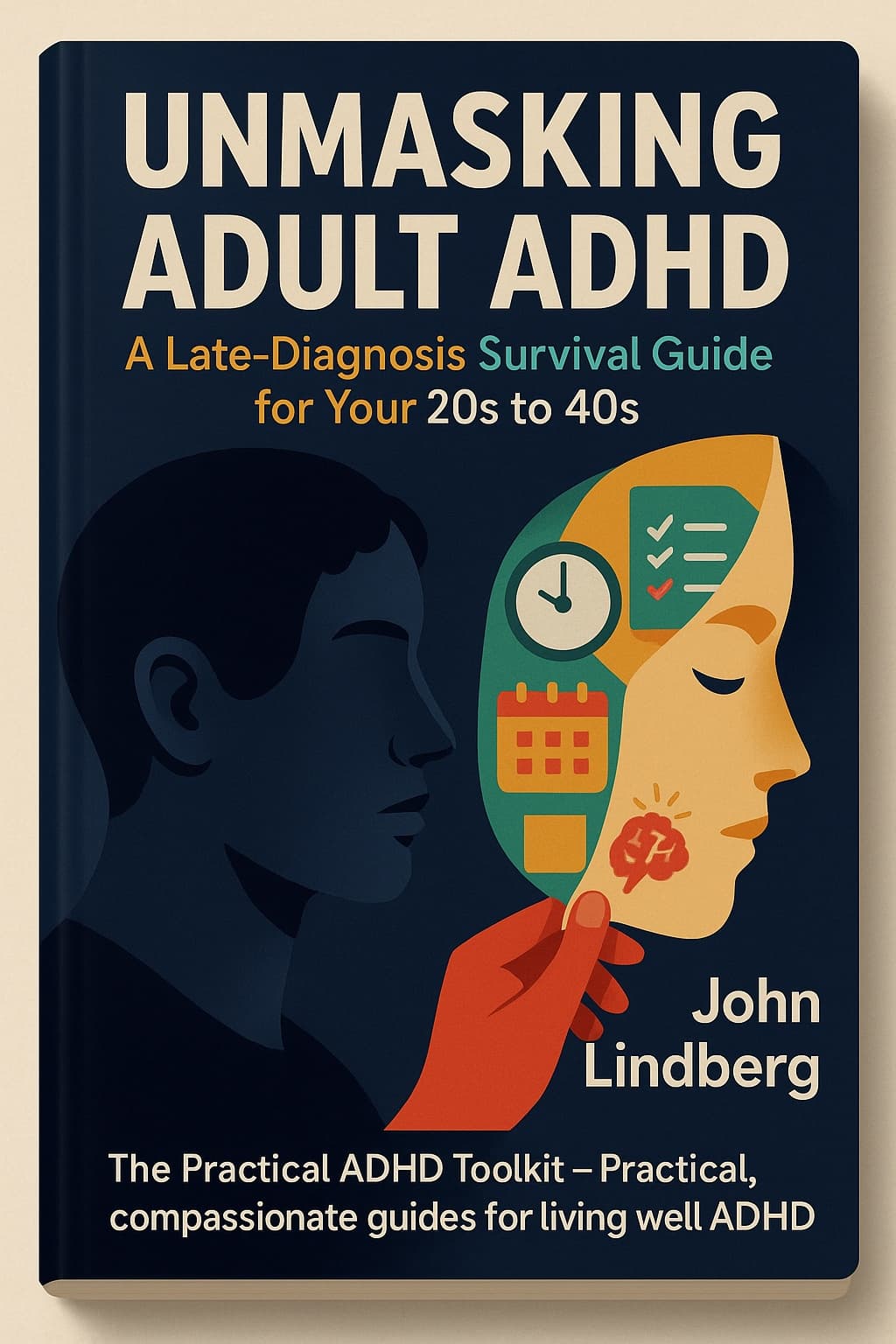
Unmasking Adult ADHD
John Lindberg · Best for: adults who looked functional while paying a huge private cost
The closest fit when late diagnosis explains years of invisible effort, masking, and exhaustion.
Some adults do not need a general manual first. They need language for what it cost to stay afloat: overpreparing, overcompensating, hiding inconsistency, and spending enormous energy to look normal in public.
This is especially well matched to readers in their 20s, 30s, and 40s who are trying to translate recognition into a less punishing way of living.
Choose this if
- late diagnosis immediately made years of effort make sense
- the word masking hits hard
- you want insight tied to concrete next moves
Not ideal if
- your main need right now is a very broad clinical overview
- your biggest immediate problem is school systems rather than adult identity and recovery
Related reads
2. Your Brain's Not Broken
Your Brain's Not Broken
Tamara Rosier · Best for: shame, overwhelm, and a more compassionate reframe
A strong bridge between self-understanding and self-management when the emotional fallout is loud.
Some late-diagnosis readers do not need more force. They need less self-attack.
This is a good bridge book between self-understanding and self-management when the emotional fallout of ADHD has become as painful as the execution problems themselves.
Choose this if
- you are hard on yourself
- shame and emotional exhaustion are part of the picture
- you want a warmer voice before you move into stricter systems
Not ideal if
- you want a highly structured clinical manual as your first read
3. How to ADHD
How to ADHD
Jessica McCabe · Best for: a friendly, modern first step
Easy to enter when diagnosis is fresh and attention is already stretched.
Late diagnosis often creates information overload. You want answers, but your brain is also tired.
This is one of the easiest books on the list to enter without feeling like you are signing up for a semester. The structure is easier to navigate and it reduces the feeling that you need to master everything before doing anything.
Choose this if
- you need something readable now
- dense expert prose makes you quit
- you want ideas you can test without a huge ramp-up
Not ideal if
- you specifically want a book centered on masking and the emotional logic of late recognition
4. A Radical Guide for Women with ADHD
A Radical Guide for Women with ADHD
Sari Solden and Michelle Frank · Best for: women whose diagnosis was delayed by expectations, camouflage, or self-doubt
A strong fit when missed diagnosis is tied to gendered expectations and self-silencing.
Late diagnosis is especially common for women who were read as anxious, messy, emotional, or not trying hard enough instead of being recognized accurately.
This book is less about generic productivity and more about reclaiming identity, reducing internalized shame, and seeing how culture and ADHD often collided in the background.
Choose this if
- you were missed for years because you looked high-functioning
- people saw the distress but not the pattern
- you want a book that speaks directly to delayed recognition in women
Not ideal if
- you want a gender-neutral general introduction
5. Taking Charge of Adult ADHD
Taking Charge of Adult ADHD
Russell A. Barkley · Best for: your second step after the emotional recognition phase
A steadier manual once you want structured action after the first relief or grief wave.
A lot of late-diagnosis adults do better if they start with a book that helps them understand the story first, and then move into a more grounded practical manual.
That is where Barkley fits. He is less about soothing the shock and more about giving adults a reliable structure for understanding the condition and acting on it.
Choose this if
- you want an adult-specific manual after the initial insight phase
- you need something clearer and more structured
- you are ready to move from explanation into action
Not ideal if
- you still need a more compassionate identity-level entry point first
6. The Practical ADHD Time Management Toolkit
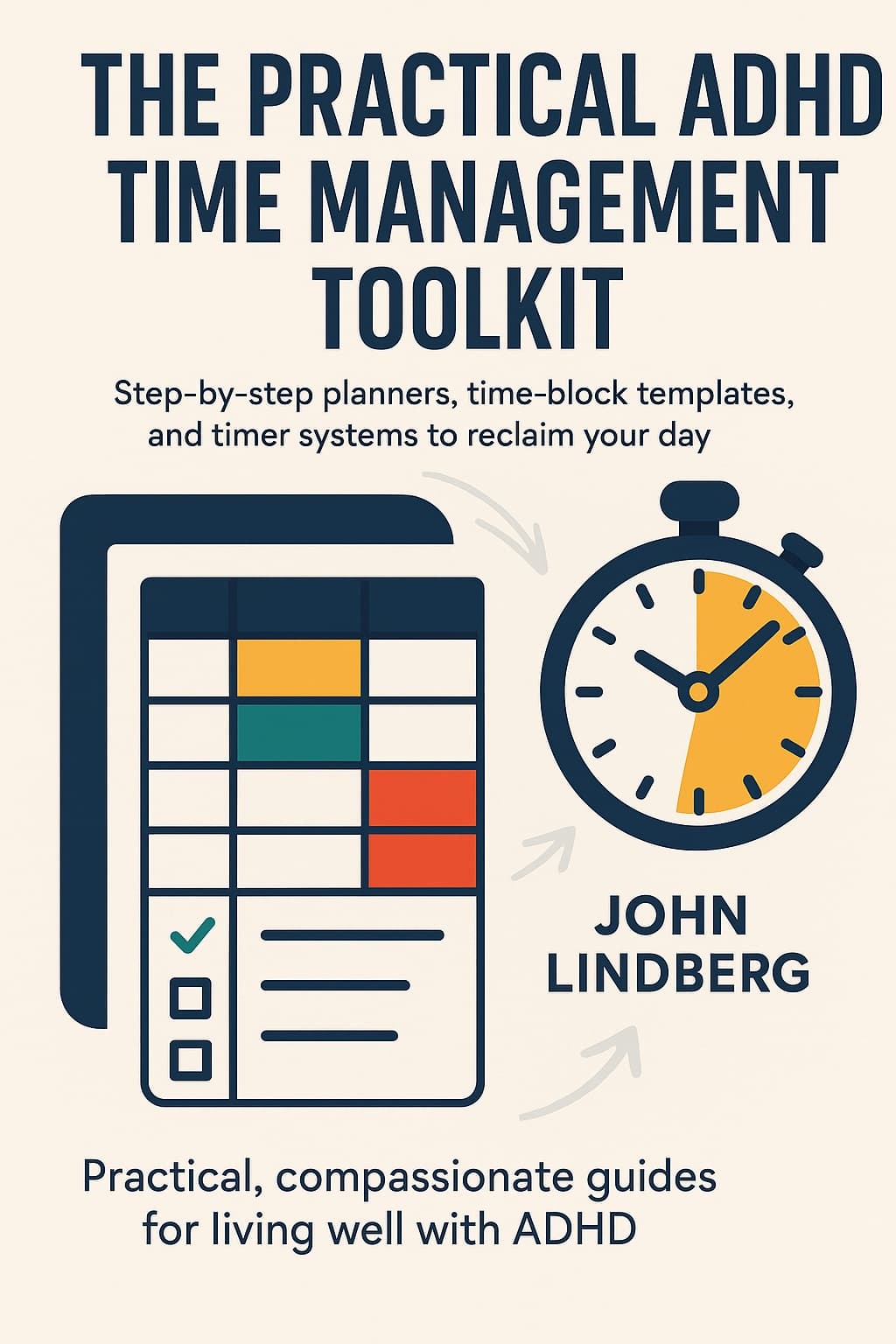
The Practical ADHD Time Management Toolkit
John Lindberg · Best for: the point where diagnosis makes sense but life is still unstable
A practical systems book for the moment insight stops being enough.
Insight alone does not protect a week.
Many newly diagnosed adults understand the pattern better and still miss appointments, lose time, avoid planning, and watch good intentions dissolve. This is the better move when diagnosis is clear enough and daily execution is still collapsing.
Choose this if
- diagnosis makes sense but your week still collapses
- your planner system is weak or nonexistent
- time blindness is the part that keeps hurting you
Not ideal if
- you still need a more compassionate first book before system-building
How to choose the right first book
If you want the short version, use this as your decision shortcut.
- Start with Unmasking Adult ADHD if hidden effort, burnout, and masking are the real pain.
- Choose Your Brain's Not Broken if shame and emotional exhaustion are central.
- Choose How to ADHD if you need the easiest book to actually begin now.
- Choose A Radical Guide for Women with ADHD if delayed recognition is tangled with gendered expectations.
- Choose Taking Charge of Adult ADHD if you want a grounded manual after the first emotional phase.
- Choose The Practical ADHD Time Management Toolkit if insight is clear but life is still unstable.
FAQ
These are the short answers to the questions readers usually ask before buying.
What is the best ADHD book if I was just diagnosed as an adult?
For many readers, Unmasking Adult ADHD or How to ADHD is the better emotional starting point. Taking Charge of Adult ADHD becomes stronger once you want a more structured manual.
What if I am not diagnosed yet, but I strongly relate?
You can still start with a book. Just do not confuse self-education with assessment. Books can help you spot patterns and reduce shame, but they do not replace evaluation or treatment.
Which book is best for masking?
Unmasking Adult ADHD is the strongest direct fit on this page. Then read the masking guide on this site if you want a shorter explanation first.
Which book is best if I am a woman who was missed for years?
Start with A Radical Guide for Women with ADHD if you want a book that speaks more directly to that path, then broaden with Taking Charge of Adult ADHD or How to ADHD depending on what you need next.
John Lindberg books that fit this comparison
These are the site-owned books that match this problem closely enough to compare directly.
Helpful guides before you choose
Use these if you want a shorter explanation before deciding which book is worth buying.
Related topics
If you want to understand the broader pattern before comparing books, use these topic hubs.
Amazon catalog
If you want to compare the full John Lindberg catalog instead of staying inside this one editorial page, use the Amazon author store.
Ready to compare the catalog against your real bottleneck?
Use the shortlist above if you want an honest editorial comparison, then move to the John Lindberg title that best fits what keeps breaking first.