Editorial comparison
Best ADHD Books for Money Management
A money-focused shortlist for adults whose financial pain is usually caused by weak visibility, admin drift, bill timing, and poor follow-through rather than math.
ADHD money problems are often less about intelligence and more about invisible obligations, weak follow-through, dread, and timing friction.
That means a good money book for ADHD adults usually does one of two things well: it helps you build a more visible planning system, or it gives you a simpler money framework with fewer moving parts.
Start with the book that matches the real money bottleneck: visibility, habits, emotional avoidance, or shared-household conflict.
Quick picks
Use this shortlist if you want the fastest way to match a book to the failure point that is costing you the most.
| Best for | Book | Why it stands out |
|---|---|---|
| Best overall if money problems are really planning problems | The Practical ADHD Time Management Toolkit John Lindberg | Best fit when bills, admin, and late fees happen because obligations are not visible enough soon enough. |
| Best practical budgeting framework | Get Good with Money Tiffany Aliche | Clear, concrete, and less finance-bro than many money books. |
| Best if automation and simplification are the real need | I Will Teach You to Be Rich Ramit Sethi | Strong when decision fatigue and overcomplicated money setups are the recurring problem. |
| Best for bill routines and weekly visibility | What Actually Helps Adults With ADHD Manage Money and Bills Practical ADHD Toolkit guide | Best short starting guide if you want the pattern and the first fixes before buying anything. |
| Best if emotional overload drives spending and avoidance | Calm Focus John Lindberg | Useful when money mistakes are being amplified by stress spikes, shutdown, and recovery gaps. |
| Best if money conflict is expensive inside a relationship | The ADHD Couple’s Guide John Lindberg | Best when shared household friction, resentment, or missed handoffs are the real issue. |
How I chose these books
These pages are trying to be useful, not perform fake objectivity or catalog hype.
- The book had to help with real-world money friction such as bills, admin drift, budgeting, recurring obligations, or decision fatigue.
- It had to be practical enough to support action, not just theory.
- It had to work for adults whose money problems are often caused by weak systems and emotional avoidance rather than lack of effort.
1. The Practical ADHD Time Management Toolkit
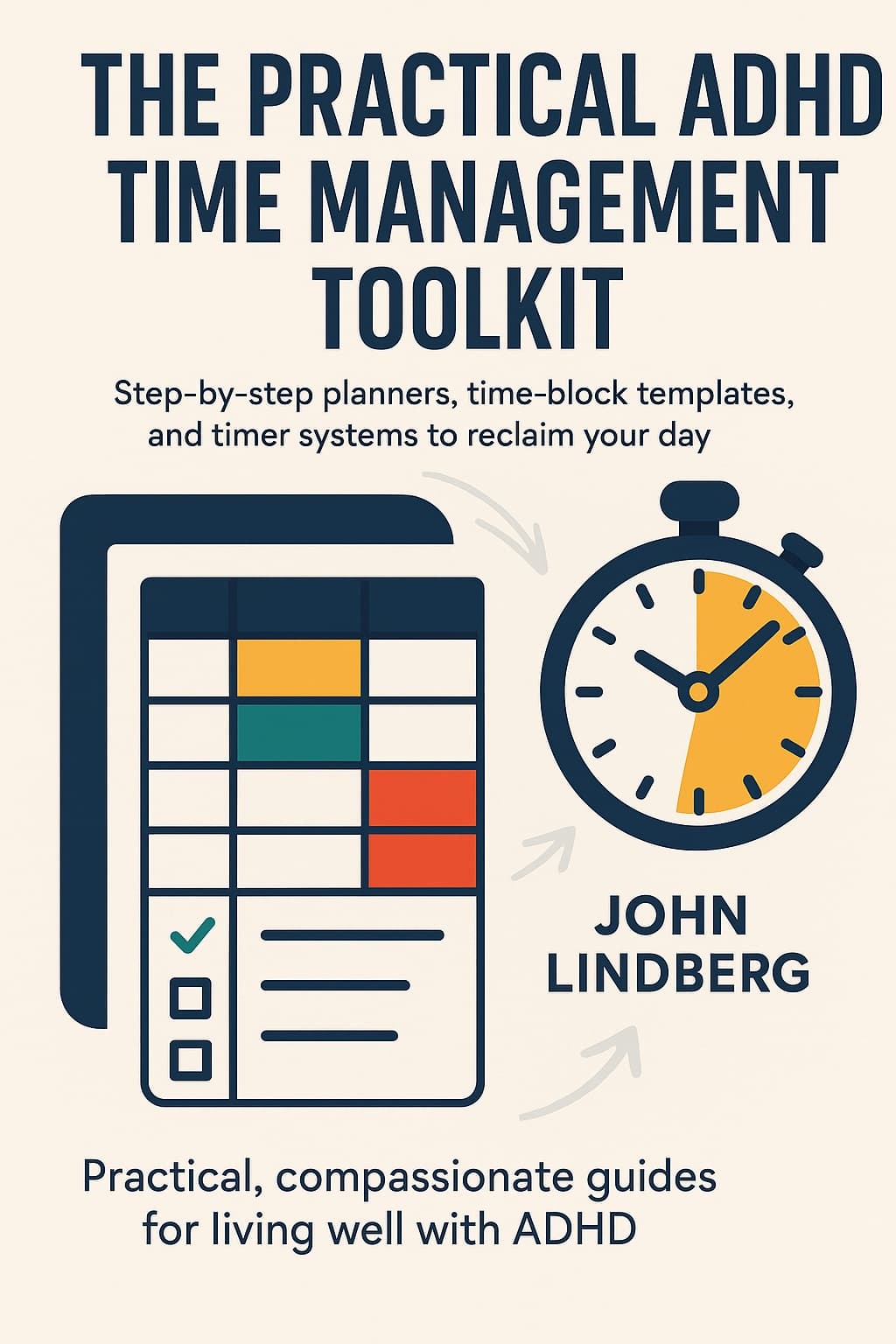
The Practical ADHD Time Management Toolkit
John Lindberg · Best for: money chaos that is really a visibility and timing problem
Often the most useful first move when bills, admin drift, and late fees are really time-management failures in disguise.
A lot of ADHD adults do not need a pure budgeting book first. They need a better system for seeing obligations before they become expensive.
If your financial pain comes from recurring obligations that go invisible, this is often the strongest first pick because it fixes the planning layer underneath the money problem.
Choose this if
- late fees and admin drift happen because the week has no shape
- you forget bills more than you misunderstand them
- you need recurring obligations to become visible and repeatable
Not ideal if
- you already have a stable planning system and need a deeper budgeting framework
Related reads
2. Get Good with Money
Get Good with Money
Tiffany Aliche · Best for: a practical budgeting framework that does not feel overly technical
Useful when you want a clear money plan without a macho finance tone.
This is a good fit if you need a concrete personal-finance framework after you have accepted that money needs more structure.
It is not ADHD-specific, but it is practical enough to help when the next problem is building a healthier money system after the visibility layer is handled.
Choose this if
- you want a more complete budgeting and savings framework
- you prefer plain language over finance-jargon density
- you need structure more than motivation
Not ideal if
- your first problem is still forgetting obligations rather than building a budget
3. I Will Teach You to Be Rich
I Will Teach You to Be Rich
Ramit Sethi · Best for: automation and simplification
Strong when decision fatigue and overly complicated money setups are the recurring problem.
Many ADHD money systems fail because they ask for too many repeated decisions.
This fits well if what you really need is simplification, automation, and fewer chances to drop the ball manually.
Choose this if
- you want to automate as much as possible
- your current money setup has too many moving parts
- you respond well to direct practical advice
Not ideal if
- your money problem is mostly emotional avoidance around bills and admin
4. Calm Focus
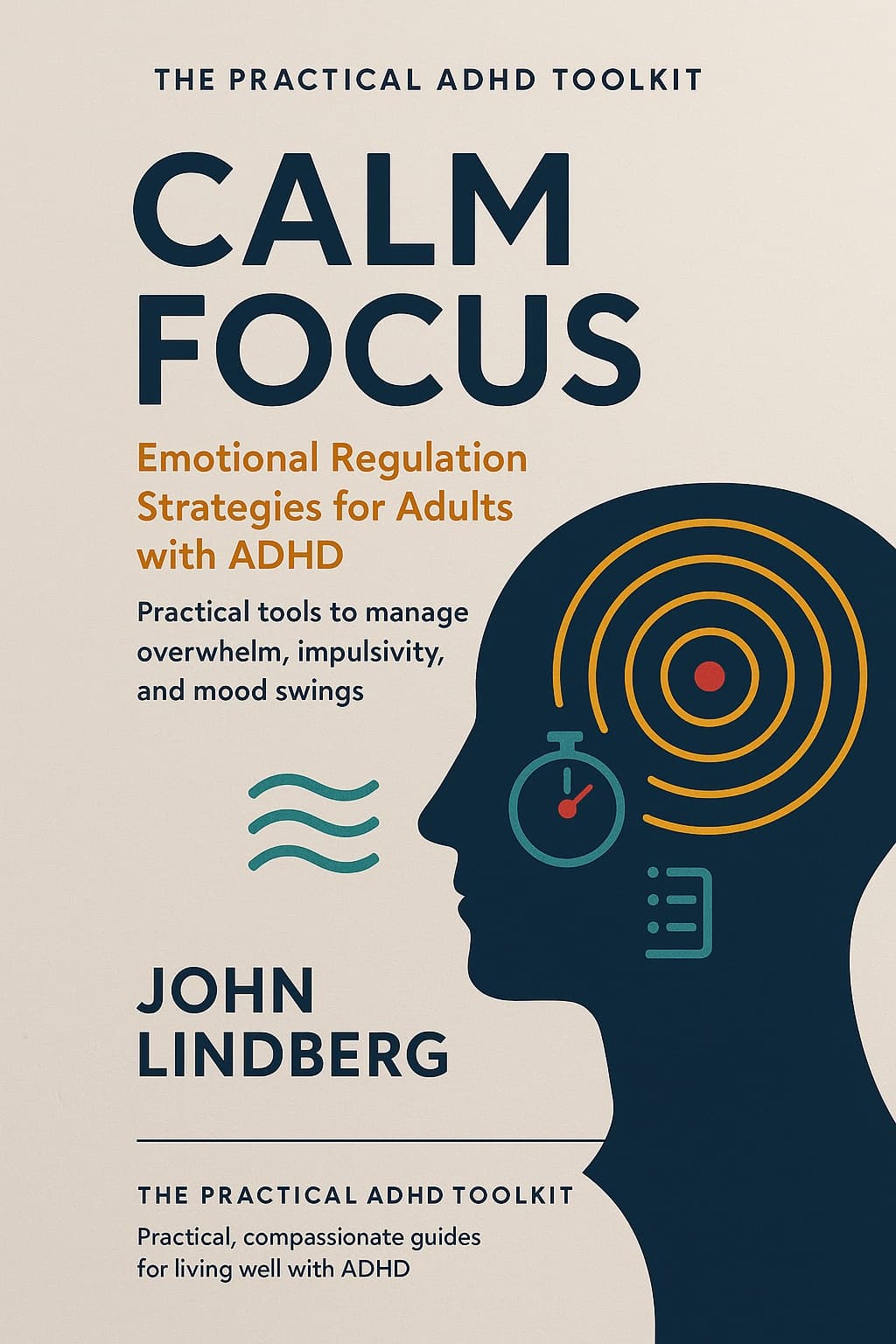
Calm Focus
John Lindberg · Best for: money problems amplified by overload, panic, and recovery gaps
Useful when spending, avoidance, or freeze patterns get much worse under stress.
Sometimes the expensive part is not the money system itself. It is the emotional spike that makes you postpone the call, ignore the bill, impulse-buy after a hard day, or stay offline for three days.
This helps when the money problem is real, but stress and poor recovery keep making it more expensive.
Choose this if
- money mistakes happen more often when you are overloaded
- admin tasks trigger shutdown or dread
- you need better regulation before the money system will hold
Not ideal if
- you mainly need a broad budgeting framework rather than regulation support
5. The ADHD Couple’s Guide
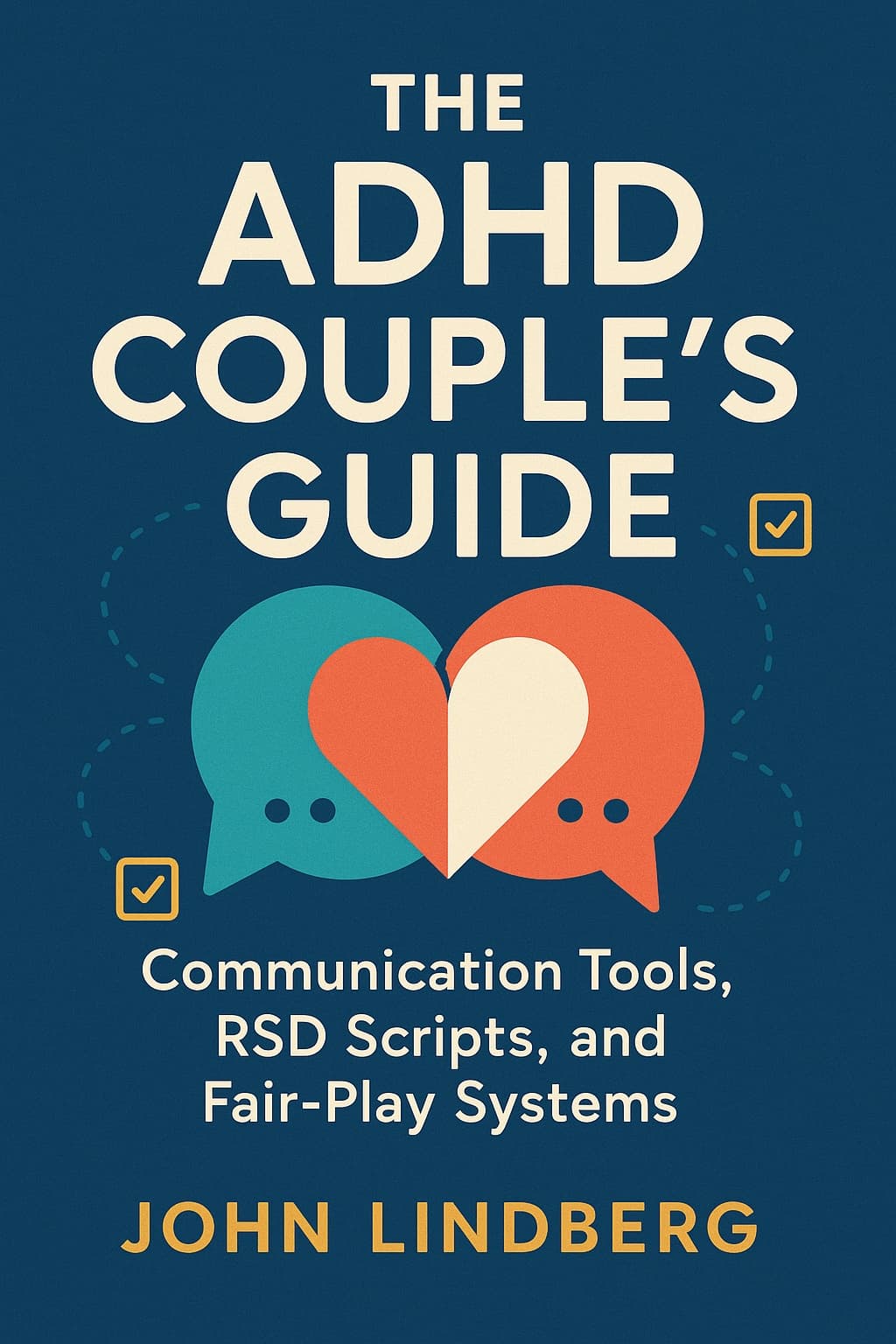
The ADHD Couple’s Guide
John Lindberg · Best for: shared-household money friction and recurring resentment
Helpful when money gets expensive because the same handoffs, assumptions, and repairs keep failing.
A lot of ADHD money stress does not stay private. It turns into relationship friction around bills, forgotten tasks, resentment, and repeated clean-up.
This belongs here when the money problem is no longer solo. It is a couple system problem.
Choose this if
- bill management or household money tasks keep turning into conflict
- one partner is carrying too much invisible admin
- repair and communication matter as much as the budget itself
Not ideal if
- the problem is mostly your own personal money routine and not shared conflict
How to choose the right first book
If you want the short version, use this as your decision shortcut.
- Pick The Practical ADHD Time Management Toolkit if bills and admin problems are really visibility problems.
- Pick Get Good with Money if you need a clearer budgeting framework after the planning layer is steadier.
- Pick I Will Teach You to Be Rich if automation and simplification are the main win.
- Pick Calm Focus if overload and shutdown keep making money mistakes more expensive.
- Pick The ADHD Couple’s Guide if money conflict is happening inside a shared household.
FAQ
These are the short answers to the questions readers usually ask before buying.
Why is a time-management book on a money page?
Because a lot of ADHD money pain is really about weak visibility and follow-through. If obligations are not visible, bills still get missed even when you understand the budget.
Should I start with a budgeting book or an ADHD systems book?
If bills, admin, and timing are still chaotic, start with the systems side first. If that layer is already stable, move into a budgeting framework.
What if money stress mostly shows up in my relationship?
Then the couple layer matters. A money system will not hold well if the handoffs, resentment, and communication keep breaking at home.
John Lindberg books that fit this comparison
These are the site-owned books that match this problem closely enough to compare directly.
Helpful guides before you choose
Use these if you want a shorter explanation before deciding which book is worth buying.
Related topics
If you want to understand the broader pattern before comparing books, use these topic hubs.
Amazon catalog
If you want to compare the full John Lindberg catalog instead of staying inside this one editorial page, use the Amazon author store.
Ready to compare the catalog against your real bottleneck?
Use the shortlist above if you want an honest editorial comparison, then move to the John Lindberg title that best fits what keeps breaking first.