Editorial comparison
Best ADHD Books for Adults
A real shortlist for adults who want a first ADHD book based on the actual bottleneck: late diagnosis, planning, organization, shame, or follow-through.
The best ADHD book for adults depends on what is breaking first.
Some adults need a broad first book that explains the pattern without drowning them in jargon. Others need something more specific: late diagnosis, organization, time management, shame, or a practical system that still works after the first burst of motivation dies.
Start with the book that matches the part of adult life costing you the most energy right now.
Quick picks
Use this shortlist if you want the fastest way to match a book to the failure point that is costing you the most.
| Best for | Book | Why it stands out |
|---|---|---|
| Best overall first book | Taking Charge of Adult ADHD Russell A. Barkley | Still the strongest all-around practical and evidence-based starting point for many adults. |
| Best easier modern entry point | How to ADHD Jessica McCabe | Readable, friendly, and easy to dip into without needing perfect focus. |
| Best for late diagnosis and masking | Unmasking Adult ADHD John Lindberg | Strong fit if the hidden cost, burnout, and finally making sense of the pattern are the real issue. |
| Best strengths-based science refresh | ADHD 2.0 Edward M. Hallowell and John J. Ratey | Shorter, optimistic, and useful if you want updated framing without a huge tome. |
| Best for physical environment control | Organizing Solutions for People with ADHD Susan C. Pinsky | Best when clutter, setup friction, and losing things are draining executive function. |
| Best for planning systems that survive real life | The Practical ADHD Time Management Toolkit John Lindberg | Best fit if your week keeps collapsing around time blindness and weak planning structure. |
How I chose these books
These pages are trying to be useful, not perform fake objectivity or catalog hype.
- Usefulness for adults rather than children or parent-facing advice.
- Readability, because dense books often die half-finished.
- Practical specificity, not just self-understanding without systems.
- Fit to a real bottleneck such as time, shame, organization, or execution.
- Likelihood that the book helps you act, not just nod along.
1. Taking Charge of Adult ADHD
Taking Charge of Adult ADHD
Russell A. Barkley · Best for: the strongest all-around first book
A reliable broad manual when you want an evidence-based adult ADHD foundation and practical next steps in the same book.
If you want one adult ADHD book that is hard to regret, start here.
Barkley is the safe pick when you want a book that treats ADHD like a real executive-function problem instead of a personality quirk. It gives adults a strong grounding in what ADHD is, how it shows up in daily life, and which kinds of strategies are worth taking seriously.
Choose this if
- you want a first book that covers work, home, and relationships
- you prefer clear structure over casual tone
- you want something grounded and durable
Not ideal if
- you bounce off clinical or expert-driven writing
- you need a more emotional or identity-focused entry point first
2. How to ADHD
How to ADHD
Jessica McCabe · Best for: adults who want the most readable entry point
A lower-friction modern starting point that many adults will actually finish.
A lot of ADHD books lose the plot because they are written as if the reader has infinite attention. This one does not.
It is easier to enter, easier to skim, and easier to return to after dropping it for a week. That matters. A book that is slightly less exhaustive but actually gets read is more useful than a perfect one that becomes furniture.
Choose this if
- you want a modern and approachable tone
- you need a book that does not feel heavy
- you want ideas you can test without reading cover to cover first
Not ideal if
- you want a more formal clinician-led explanation as your first read
3. Unmasking Adult ADHD
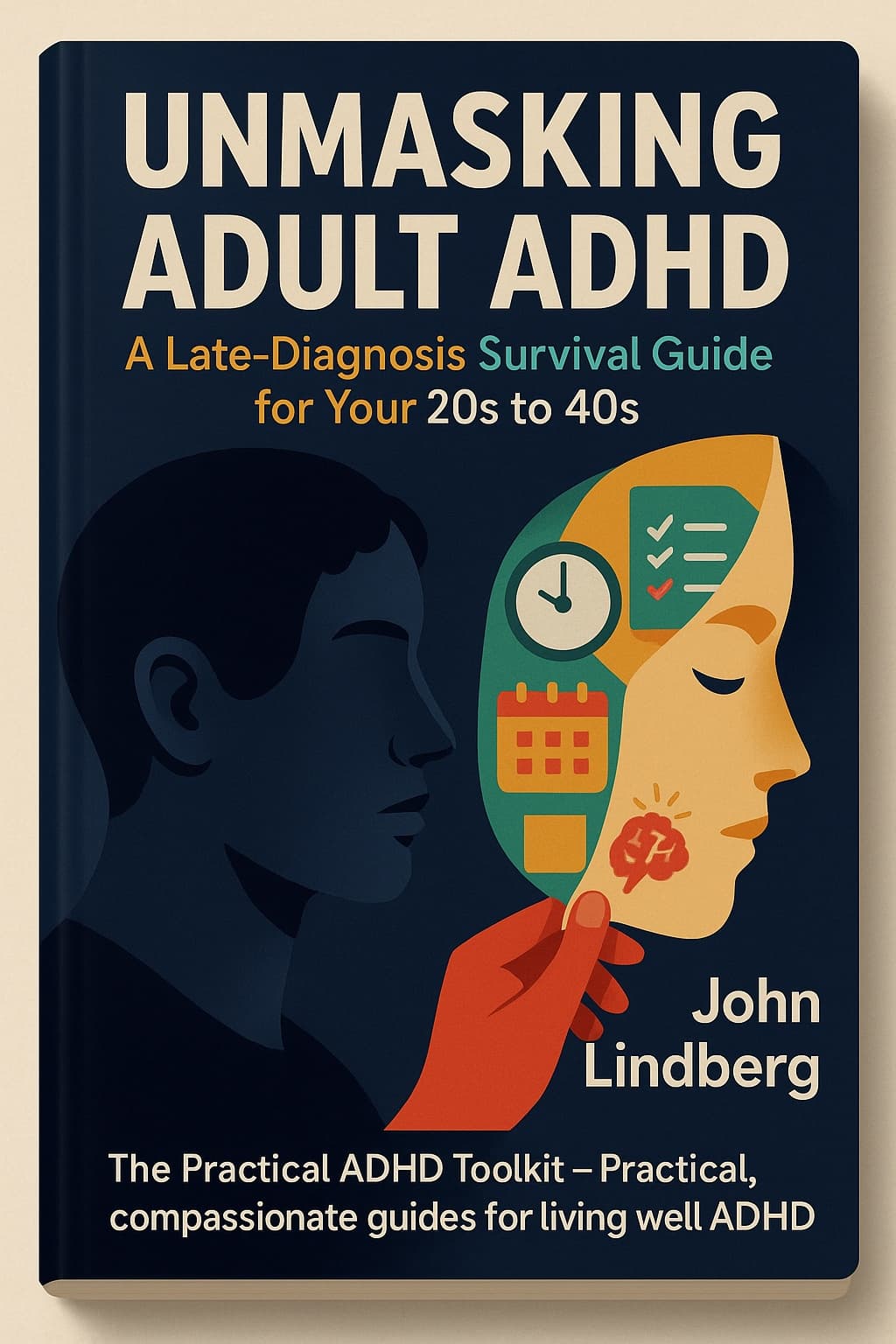
Unmasking Adult ADHD
John Lindberg · Best for: late recognition, masking, and high private cost
One of the better fits when the core pain is hidden effort, burnout, and translating late recognition into life changes.
Some adults do not need a broad “what is ADHD?” book first. They need a book that explains why they look functional on the outside while feeling chronically overworked, inconsistent, and privately fried.
This is strongest when diagnosis is new, self-suspicion is recent, or the word masking instantly explains too much.
Choose this if
- you were diagnosed late or suspect ADHD now as an adult
- you are tired of looking capable while paying a huge hidden cost
- you want language that connects self-understanding to actual life changes
Not ideal if
- your main issue is purely school systems or day-planner mechanics
Related reads
4. ADHD 2.0
ADHD 2.0
Edward M. Hallowell and John J. Ratey · Best for: a shorter strengths-based science overview
A broad refresh with a more hopeful frame if you want perspective before you want systems.
This is a good choice if you want a modern-feeling overview with a more hopeful frame and you do not want to start with something huge.
It works best as a reframing and orientation book. It is not the most tactical book on the list, but it is a solid second path if you want science and encouragement in the same place.
Choose this if
- you want a shorter science-forward read
- you respond well to strengths-based framing
- you want a broad refresh more than a narrow toolkit
Not ideal if
- you need detailed systems for calendar control or home organization right now
5. Organizing Solutions for People with ADHD
Organizing Solutions for People with ADHD
Susan C. Pinsky · Best for: clutter, setup friction, and practical home organization
Especially useful when clutter and household drag are making every other ADHD symptom worse.
A lot of adults with ADHD do not actually need more insight first. They need their environment to stop fighting them.
This is the most useful book here when the real issue is physical friction: piles, lost items, setup chaos, too many steps, or rooms that require more executive function than you have available.
Choose this if
- your home or workspace keeps creating friction
- you lose things constantly
- you need visible practical organization more than mindset work
Not ideal if
- your main pain is emotional regulation or late-diagnosis identity work
6. The Practical ADHD Time Management Toolkit
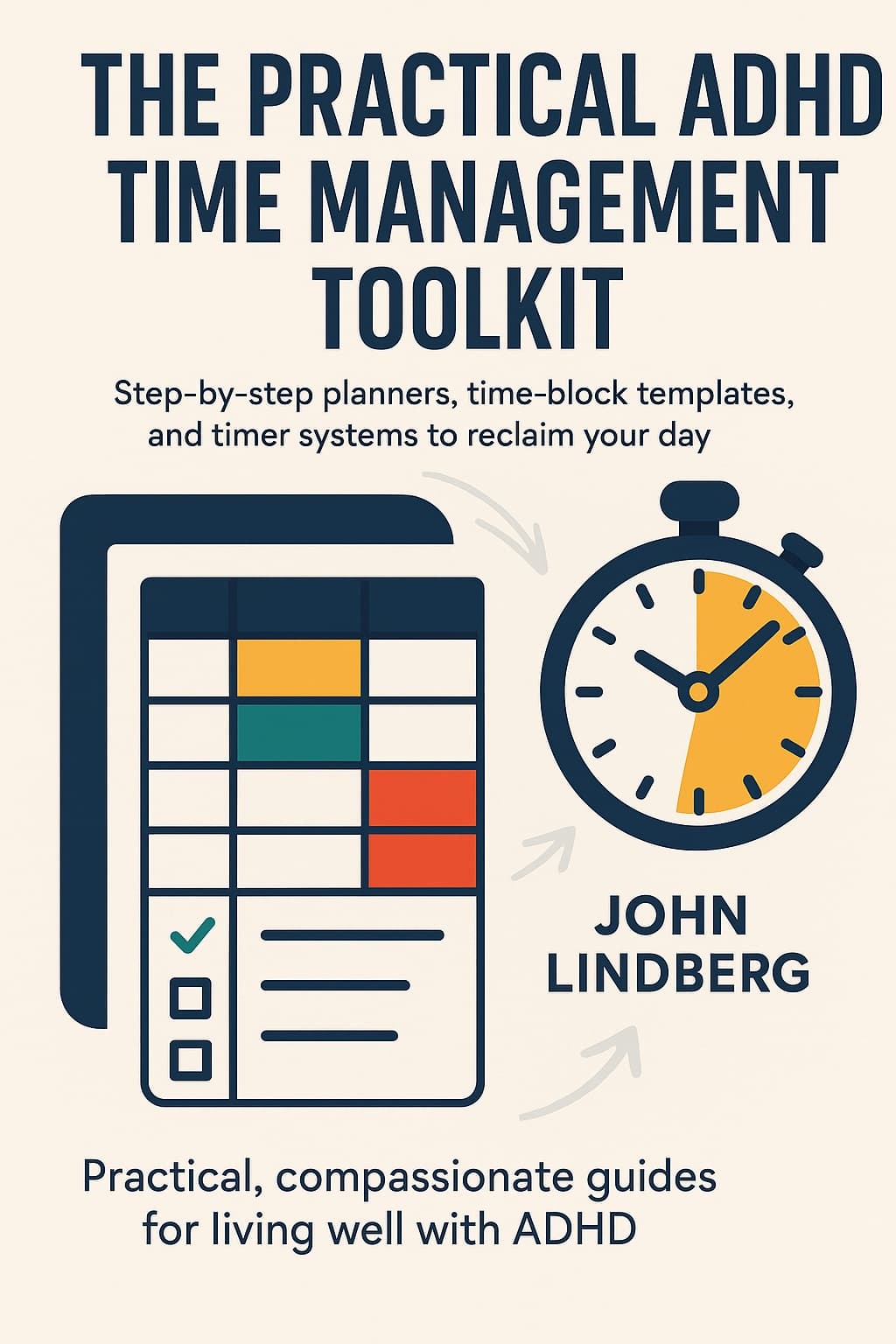
The Practical ADHD Time Management Toolkit
John Lindberg · Best for: adults whose week keeps collapsing
A better fit than a broad ADHD overview when the week keeps slipping and systems keep dying after day three.
This is the book to use when the main complaint is: I know what matters, but my time system does not hold.
It is built for adults who do not need more explanation as much as they need a planning structure that survives normal life.
Choose this if
- your planner keeps turning into a guilt object
- your calendar is too vague or too fragile
- every week starts well and ends in reactive cleanup
Not ideal if
- you are still trying to figure out whether ADHD is the right frame at all
Related reads
How to choose the right first book
If you want the short version, use this as your decision shortcut.
- Pick Taking Charge of Adult ADHD if you want the safest all-around first book.
- Pick How to ADHD if you want the easiest book to actually finish.
- Pick Unmasking Adult ADHD if late diagnosis and masking are the real pain.
- Pick ADHD 2.0 if you want a shorter strengths-based science read.
- Pick Organizing Solutions for People with ADHD if your environment is the bottleneck.
- Pick The Practical ADHD Time Management Toolkit if the week keeps falling apart.
FAQ
These are the short answers to the questions readers usually ask before buying.
Are ADHD books enough if I think I may have ADHD?
No. Books can help you understand patterns and test self-management ideas, but they do not replace diagnosis or care from a qualified clinician.
Which book should I start with if I was just diagnosed?
Usually either Taking Charge of Adult ADHD or Unmasking Adult ADHD, depending on whether you need broad practical grounding or late-diagnosis clarity first.
Which book is best for work problems?
If the issue is broad adult functioning, start with Taking Charge of Adult ADHD. If the issue is planning and execution, start with The Practical ADHD Time Management Toolkit. If meetings and interruptions are the real problem, look next at The Practical ADHD Workplace Planner.
Which book is best if money is the part that keeps hurting me?
Start with the planning angle first, because money chaos is often a visibility and follow-through problem before it is a budgeting problem. Then move to the money-management comparison page.
John Lindberg books that fit this comparison
These are the site-owned books that match this problem closely enough to compare directly.
Helpful guides before you choose
Use these if you want a shorter explanation before deciding which book is worth buying.
Related topics
If you want to understand the broader pattern before comparing books, use these topic hubs.
Amazon catalog
If you want to compare the full John Lindberg catalog instead of staying inside this one editorial page, use the Amazon author store.
Ready to compare the catalog against your real bottleneck?
Use the shortlist above if you want an honest editorial comparison, then move to the John Lindberg title that best fits what keeps breaking first.